
Indian benchmark indices, Sensex and Nifty, recorded their fourth consecutive day of losses, driven by relentless foreign institutional investor (FII) outflows, rising bond yields, and a significant surge in crude oil prices, impacting overall investor sentiment.
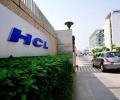
Shares of HCL Tech hit a fresh record high of Rs 1,118.55 on Friday, up 2 per cent on the BSE in intra-day trade, surpassing its previous high of Rs 1,101 touched on Thursday in intra-day deals.

Indian benchmark indices, Sensex and Nifty, closed higher on Thursday, breaking a three-day losing streak, driven by late buying in financial heavyweights like HDFC Bank and Axis Bank, despite persistent geopolitical tensions and crude oil prices exceeding USD 100 per barrel.

Indian benchmark indices, Sensex and Nifty, experienced a significant drop in early trade, with the Sensex falling over 600 points, primarily due to crude oil prices surging past the USD 100 per barrel mark and weak global market trends. Track Sensex, Nifty on September 24.
Indian benchmark indices Sensex and Nifty experienced significant declines in early trade, driven by soaring crude oil prices amidst escalating tensions in West Asia, coupled with weak global market trends and foreign fund outflows.

Indian benchmark indices, Sensex and Nifty, experienced declines in early trade due to elevated crude oil prices, escalating US-Iran hostilities, and renewed concerns over a potential US interest rate hike.

Indian benchmark indices Sensex and Nifty recorded sharp gains, rising over 1 per cent, driven by strong performances in IT stocks, HDFC Bank, and renewed foreign fund inflows, despite mixed global cues and elevated crude oil prices.

Indian benchmark equity indices, Sensex and Nifty, rallied in early trade, driven by positive global market trends and easing crude oil prices, despite the US Federal Reserve's hawkish stance tempering overall sentiment. Track Sensex, Nifty on September 18.

On September 26, HCL Technologies announced the terms of a cash offer to acquire the entire issued and to be issued share capital of Axon at a price of 650 pence per Axon share. On October 8, HCL EAS, the indirect wholly-owned subsidiary of HCL Technologies, acquired 3,01,623 Axon shares which represent approximately 0.47 per cent of the current issued share capital of Axon.

Indian benchmark indices, Sensex and Nifty, traded marginally higher in early trade despite the US Federal Reserve's recent rate hike and indications of further tightening, with the National Stock Exchange's much-anticipated Rs 22,569-crore IPO also opening for subscription.

The awards were given by the UN's body on women for their work on principles of women's empowerment and helping champion gender equality.
HCL Technology Ltd has secured a contract worth $180 million for its business process outsourcing service operations from BT, a global telecommunications services provider.
Indian benchmark equity indices, Sensex and Nifty, rebounded after a two-day losing streak, driven by strong buying in blue-chip IT stocks and positive global market cues, with the Sensex climbing 330.92 points.

Last year the company had acquired four companies, including one in the telecom sector, and plans to do the same in the coming months.

Converts part of fixed salary component into variable one

Indian benchmark equity indices, Sensex and Nifty, rebounded in early trade after two days of losses, driven by strong buying in blue-chip IT stocks and a rally in global markets.
Indian benchmark stock indices, Sensex and Nifty, rebounded on Friday, driven by value buying in banking, oil & gas, and auto shares following recent sharp losses. The Sensex climbed 315.20 points to settle at 73,895.74, while the Nifty rose 77.40 points to 23,140.50.
Indian benchmark indices Sensex and Nifty experienced a significant decline in early trade, driven by renewed tensions between the US and Iran and a subsequent spike in global crude oil prices, creating uncertainty in the market. Track Sensex, Nifty on July 8.

Indian benchmark indices, Sensex and Nifty, saw an early rebound after significant losses, driven by value buying, though elevated oil prices and anticipation of the US Federal Reserve's policy decision tempered gains. Track Sensex, Nifty on September 16.

Indian benchmark indices, Sensex and Nifty, closed lower due to profit-taking after a four-day rally, influenced by weakness in Asian markets, with Trent shares tumbling over 12 per cent.

Indian benchmark indices Sensex and Nifty experienced a significant downturn in early trade, ending a five-day rally, primarily due to heavy selling in IT firms following a revenue growth guidance cut by global consulting giant Accenture.

Indian benchmark indices Sensex and Nifty surged in early trade, with the Sensex jumping nearly 700 points, primarily driven by strong buying in IT stocks following TCS's positive June-quarter results and optimistic demand outlook. Track Sensex, Nifty on July 10, 2026.

C Vijayakumar, the reticent chief executive of HCL Technologies, India's third-largest IT services firm, was recently appointed managing director, succeeding the founder, Shiv Nadar. Back in October 2016, when CVK, as he is popularly called within and outside of HCL, was named CEO, it had been somewhat of a surprise - his elevation being the result of his predecessor, Anant Gupta, suddenly stepping down to "pursue personal interests". CVK, 53, has since taken the firm from under $7 billion to over $10 billion in revenue.

Indian benchmark indices Sensex and Nifty experienced declines in early trade, influenced by the escalating US-Iran standoff and persistently high crude oil prices, with experts predicting increased volatility.

Indian stock market benchmark indices Sensex and Nifty rebounded in early trade, driven by a decline in crude oil prices, supportive global cues, fresh foreign fund inflows, and buying in blue-chips like Reliance Industries and HDFC Bank. Track Sensex, Nifty movement on June 22, 2026.

Uttar Pradesh Chief Minister Yogi Adityanath announced the state's ambitious shift from mobile phone assembly to advanced microchip manufacturing, data centres, and artificial intelligence. He highlighted significant investments and growth in the digital economy, attributing the transformation to the "double-engine government's" alignment with national initiatives like 'Make in India' and 'Aatmanirbhar Bharat'. Adityanath also criticised previous administrations for hindering the state's potential.
Indian benchmark equity indices, Sensex and Nifty, extended their winning streak for a third consecutive day, driven by a rally in IT stocks and global cues suggesting a more accommodative monetary policy after softer-than-expected US jobs data.
Indian benchmark indices Sensex and Nifty surged in early trade, driven by a rally in IT stocks and tempered expectations of US Federal Reserve monetary tightening following softer-than-expected US jobs data. Track Sensex, Nifty on July 3.

Software exporter HCL Technologies on Tuesday reported a standalone net profit of Rs 192.94 crore (Rs 1.92 billion) for the quarter ended June 30, 2009, while it had a net loss of Rs 13.54 crore (Rs 135.4 million) in the corresponding period previous fiscal.
Indian benchmark equity indices, Sensex and Nifty, closed lower due to persistent geopolitical tensions in the Middle East and elevated crude oil prices, with investors remaining cautious ahead of fresh US sanctions on Iran.

Indian benchmark equity indices, Sensex and Nifty, experienced a decline in early trade, ending a three-day rally, primarily due to heavy selling in IT stocks and concerns over prolonged instability in West Asia.

Indian benchmark indices Sensex and Nifty rebounded in early trade, driven by strong buying in blue-chip stocks and positive cues from Asian markets, following a significant selloff in the previous session.

Indian stock market benchmark indices Sensex and Nifty closed nearly one per cent higher, extending their winning streak for a second day. This rally was driven by softening crude oil prices, positive geopolitical developments, and significant buying in blue-chip IT stocks, despite a broader global tech sell-off.
Indian benchmark indices, Sensex and Nifty, recovered intraday losses to close higher, driven by late-day buying and a significant decline in Brent crude oil prices, which fell 3 per cent to USD 89.32 per barrel.
Indian benchmark equity indices, Sensex and Nifty, experienced declines in early trade due to elevated crude oil prices and persistent geopolitical uncertainties, particularly following the expiry of the US-Iran ceasefire. Track Sensex, Nifty on August 19, 2026.

HCL Technologies remains under pressure after missing Q4 expectations and issuing cautious FY27 guidance. Analysts highlight weak margins, soft demand, and muted growth outlook.
Indian benchmark indices Sensex and Nifty saw declines in early trade, influenced by elevated crude oil prices stemming from renewed geopolitical uncertainties, particularly concerns surrounding the Strait of Hormuz. Track Sensex, Nifty on August 11, 2026.
Indian benchmark indices Sensex and Nifty closed lower, with the Sensex dropping 388 points and Nifty declining 112 points, as a sharp rally in crude oil prices, driven by geopolitical uncertainties and concerns over the Strait of Hormuz, dampened investor sentiment and reignited inflation fears.

Software exporter HCL Technologies (HCLT) on Wednesday said it will hire about 3,000 people in the July-September quarter.
Software exporter HCL Technologies (HCLT) on Wednesday said it will hire about 3,000 people in the July-September quarter.
